Wanderlust Staff Writer
April 3, 2025 · 3 min read
Three weeks in Iceland from November to December — volcanic hot springs, black sand deserts, the Westfjords in deep freeze, and the northern lights appearing over a frozen waterfall at 2am when you'd almost given up.
Everyone tells you to go in summer: the midnight sun, the puffins, the green hillsides and wildflowers. And they're right — Iceland in June is extraordinary. But there's another Iceland, the one that runs from November through February, and it's where the country shows its true nature.
The Dark
In Reykjavik in December, you get about four hours of actual daylight. Not four hours of sun — four hours between civil twilight and dark. The sun barely clears the horizon, casting everything in a long golden hour that lasts until it doesn't.
This does something to the psychology. By week two, you start organizing your days differently — not around morning and afternoon but around light windows and dark windows. The darkness stops being oppressive and becomes atmospheric. The city feels more intimate. The hot dogs from Bæjarins Beztu taste better in the cold.
The Westfjords
The Westfjords in November are the most beautiful place I've been on this planet, and I include Patagonia in that assessment.
The landscape is fjords stacked on fjords — water cutting deep into mountains that rise almost vertically, with small farms clinging to the lower slopes. In summer, they're remote. In winter, several roads close. The peninsula feels like it's being reclaimed by something older.
I drove the Westfjords over three days, staying in guesthouses in Ísafjörður and Hólmavík, watching the light change the color of the water from steel gray to violet to a brief burning gold in the afternoon. A herd of Arctic foxes — white-phase, almost invisible against the snow — crossed the road near Dynjandi waterfall, which was frozen at its edges but still running, the mist icing the surrounding rocks into formations that looked deliberately sculpted.
Finding the Northern Lights
Chasing the aurora is an exercise in humility. The science is sound — you need darkness, clear skies, and sufficient solar activity (tracked via the Vedur.is app, which gives you a real-time geomagnetic forecast). But the execution is entirely at the mercy of Icelandic weather, which is famously indifferent to human plans.
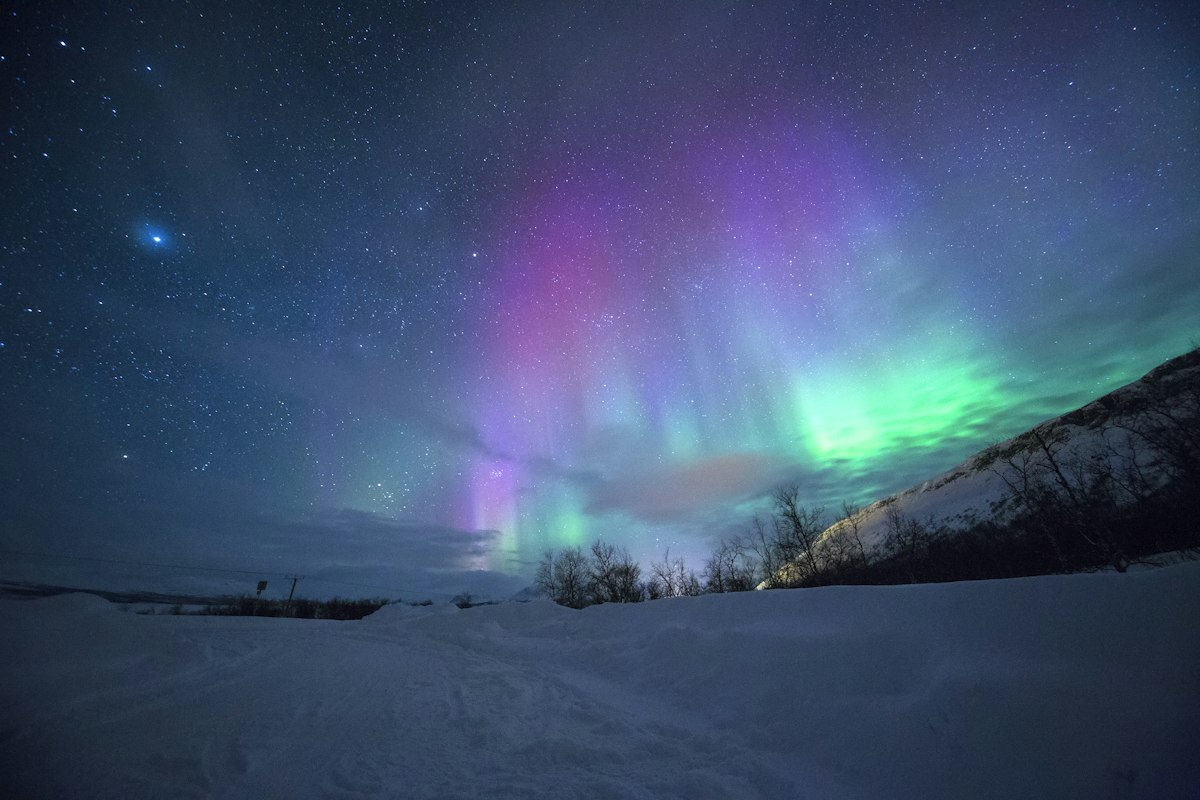
I spent six nights trying before I saw them properly. Five nights of clouds, of almost-clearing-skies, of driving the Ring Road at midnight with headlights off, waiting. Then a night near Vík, parked on the black sand with the North Atlantic crashing in the darkness behind me, and they came.
Not the thin green brush strokes you see in some photos — the full display, moving, alive, rippling from horizon to horizon in green and violet and white. It lasted forty minutes. I have photographs that don't come close to capturing it. This is the correct outcome: some things should resist documentation.
Practical Notes
- Car: 4WD mandatory in winter. Roads close without warning.
- Weather app: Vedur.is is the essential download
- Clothing: Layering system rated to -20°C, even if temperatures are typically milder. Wind makes the effective temperature brutal.
- Budget: Iceland is expensive. A guesthouse room runs €80-150/night, a restaurant meal €25-45. Self-catering saves money.
- Geothermal pools: Every small town has one. Entry is typically €6-8. At 38°C in a snowstorm, this is value that cannot be calculated.
The Secret Lagoon (Gamla Laugin) in Flúðir is less crowded and more atmospheric than the Blue Lagoon. Go in the morning, stay for an hour.