Wanderlust Staff Writer
September 5, 2025 · 3 min read
Two weeks in Fiordland — the deepest wilderness in New Zealand, accessible by a four-day walk through ancient rainforest, by kayak through mist-filled fjords, or, if the knees are gone, by boat with a very good raincoat.
Rudyard Kipling called Milford Sound the eighth wonder of the world, which was either extremely generous or a reflection of the fact that Kipling didn't get out that much. Milford is extraordinary, but Fiordland as a whole — the region that contains it, the national park that protects it, the nineteen fjords carved by glaciers over two million years — is something the word "wonder" doesn't quite reach.
The Milford Track
The Milford Track is New Zealand's most famous walk. Four days, 53 kilometers, from the head of Lake Te Anau through beech forest and subalpine meadows, over the 1,154-meter MacKinnon Pass, and down through the spectacular Arthur Valley to Milford Sound. The track was described in 1908 as "the finest walk in the world." It has mostly earned that description.
The booking system is strict: you walk in a set direction, a set number per day, staying in huts spaced a day's walk apart. You carry your food. The huts have gas stoves, running water, and mattresses; everything else you carry in.
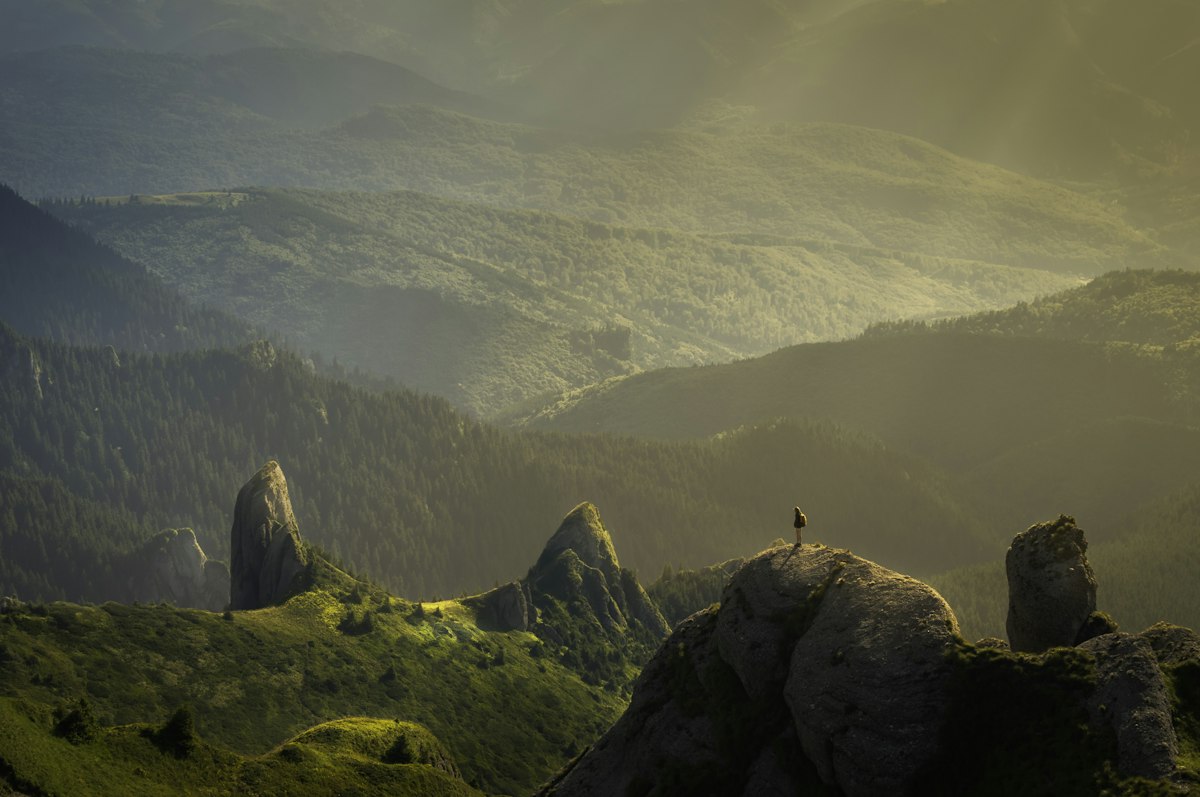
Day three — the MacKinnon Pass day — is the one that sorts the trip into before and after. You climb 900 meters through beech forest, emerge above the treeline, and cross a pass that in good weather provides views over two valleys simultaneously. Then it rains, as it almost certainly will (Milford Sound receives 7,000mm of rain per year), and the pass fills with cloud and the visibility drops to thirty meters and the waterfalls that appear from every rock face double in volume and the whole mountain becomes a moving, roaring thing.
This is better than the clear day. The Fiordland rain is the landscape's true state, not an inconvenience. Everything here evolved for it.
Kayaking the Fjord
The tourist boats that run the length of Milford Sound are excellent for weather protection and shelter from sandflies (the sandflies are real; their reputation is not exaggerated). But the fjord at water level, in a sea kayak, is a different scale of experience.
Mitre Peak — the iconic 1,692-meter peak that appears in every photograph — is not visible from directly below it, but you feel its mass, the way it redirects the water and the wind. The waterfalls — Stirling Falls, Lady Bowen Falls — are close enough to paddle under when the flow is high, which it usually is. Fur seals haul out on rocks near the fjord mouth.
We paddled six hours out to the Tasman Sea and back, which was three hours more than the guide had initially suggested. The light was doing something unaccountable with the rock face and neither of us wanted to stop looking at it.
Getting There
Milford Sound is 120 kilometers by road from Te Anau, the last town with accommodation. The Milford Road is one of the great scenic drives — the Homer Tunnel alone, blasted through solid rock and descending at a 1-in-10 gradient on the far side, is worth the trip. But the road closes in heavy rain (which is frequently), and the drive takes over two hours in good conditions.
Most people fly into Queenstown (3 hours from Te Anau) or Invercargill (1.5 hours). The rental cars all have chains in the glove box, which tells you something.
Fiordland Beyond Milford
Doubtful Sound is deeper, less visited, and requires a boat to get in (there's no road access). Dusky Sound is the largest, the most remote, the one that requires a boat charter or floatplane. The Te Araroa Trail runs through Fiordland's edges. Caves beneath Te Anau contain glowworms that make the ceiling look like the night sky.
Two weeks in Fiordland was not enough. I knew this on day three and it only became clearer.
Book the Milford Track six months in advance for peak season (October–April). A set number of walkers per day means it genuinely sells out.